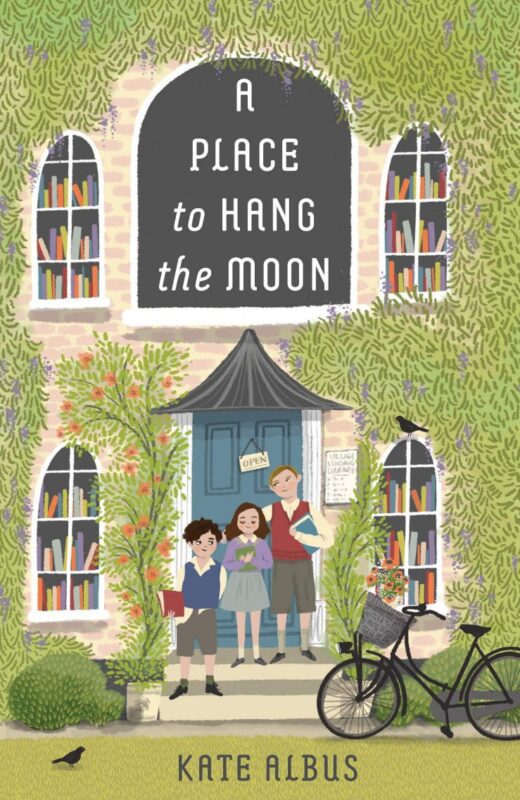
I have a weakness for any story centered around British children sent to live in the countryside during WWII. I know that it's a common topic, but I just can't help myself. Bedknobs and Broomsticks anyone? The Chronicles of Narina? Unlike those fanciful tales, A Place to Hang the Moon is firmly centered in reality. Yet, this story still held a magical nostalgia and charm that I adored. The three children at the center of the story - William, Edmund, and Anna - have been recently orphaned, and they're sent to live with a family as evacuees. There is hope in this decision that they will find a family that will adopt them after the war's end.
I absolutely devoured this story. The nostalgia, the sweetness, and the character development are all there. The children are incredibly sympathetic and realistic all the same. While this story is historical fiction, the history lies very much in the background while the children's lives and experiences take center stage. Still, there is much to learn about the experiences of young evacuees during WWII and the hardships of daily life during that time. I even enjoyed the descriptions of the meals the children ate. I'm not sure this story has a place in the classroom, however, it is the perfect story to read to your children at bedtime. Like me, you might enjoy reading it all on your own!


From the publisher, “It is 1940 and William, 12, Edmund, 11, and Anna, 9, aren’t terribly upset by the death of the not-so-grandmotherly grandmother who has taken care of them since their parents died. But the children do need a guardian, and in the dark days of World War II London, those are in short supply, especially if they hope to stay together. Could the mass wartime evacuation of children from London to the countryside be the answer?
It’s a preposterous plan, but off they go– keeping their predicament a secret, and hoping to be placed in a temporary home that ends up lasting forever. Moving from one billet to another, the children suffer the cruel trickery of foster brothers, the cold realities of outdoor toilets and the hollowness of empty stomachs. They find comfort in the village lending library, whose kind librarian, Nora Müller, seems an excellent choice of billet, except that her German husband’s whereabouts are currently unknown, and some of the villagers consider her unsuitable.
A Place to Hang the Moon is a story about the dire importance of family: the one you’re given, and the one you choose.”